A working crew.
Salvage is dangerous work. Skills, supplies, and trust matter more than grand speeches when a ship has to bring its people home.
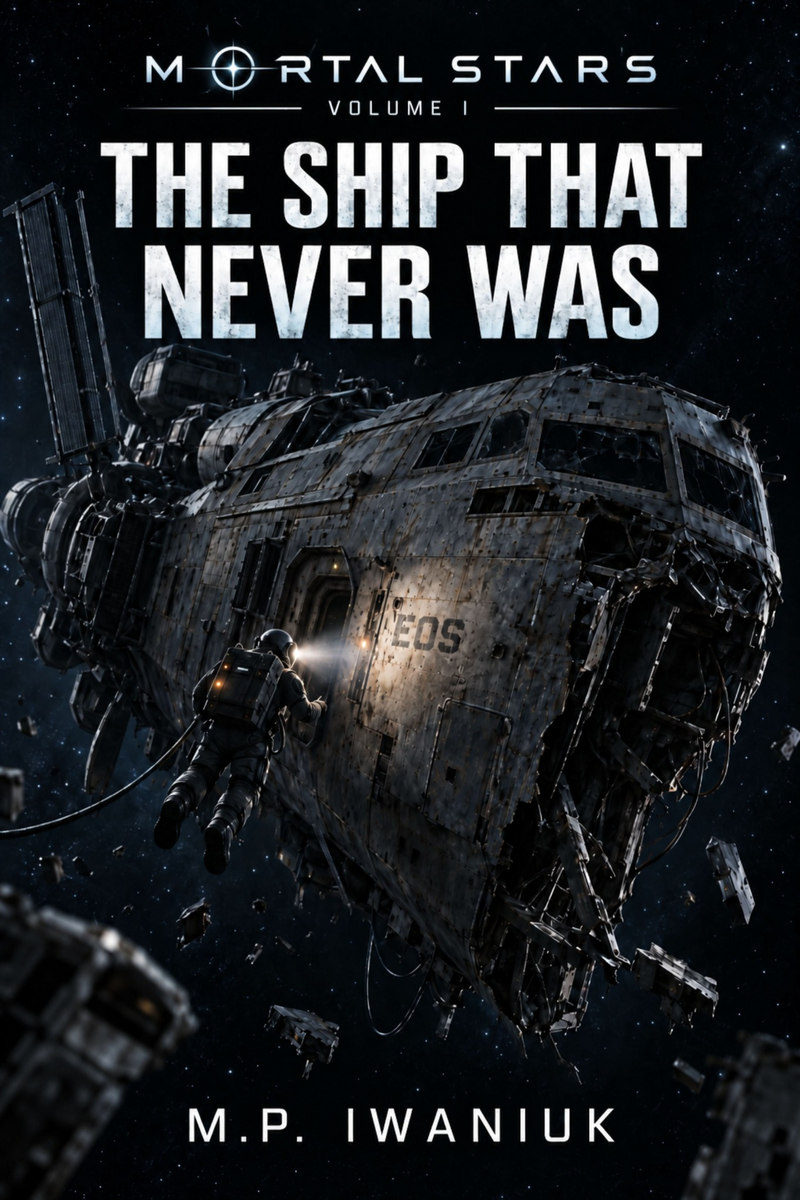
A salvage mission. A ship that should not exist.
The crew of the Nadir makes its living recovering what others leave behind. One discovery could change everything they believe about humanity’s past.
Start here. No earlier books to read first.
A mystery in the darkness
For first officer Kael Veyr, a derelict spacecraft is a job, not a legend. Aboard the salvage vessel Nadir, staying alive means checking the equipment, trusting the crew, and knowing when to turn back.
Then an unfamiliar distress signal leads them to a ship whose records do not fit the history the colonies have been taught. What should be a recovery mission becomes a struggle over evidence—and over who has the power to decide what everyone else is allowed to know.
With resources running low and pressure closing in, Kael and the crew must decide what they can prove, whom they can trust, and how much they are prepared to risk. In a society where access to a longer life comes at a price, refusing to surrender the truth can threaten far more than a single contract.
What do you do when bringing the truth home puts everyone aboard at risk?
Salvage is dangerous work. Skills, supplies, and trust matter more than grand speeches when a ship has to bring its people home.
A strange vessel challenges an accepted story. Finding evidence is only the beginning; keeping it intact is another problem.
Doing the right thing does not make the consequences disappear. Every decision reaches beyond the person who makes it.
Preview Volume I
Eight years after the End, a ship has seconds to clear its berth. With the launch checks incomplete, engineer Olin Marr must decide whether to proceed.
Open the book on Amazon and select Read sample when it is available for your edition.
Amazon provides the preview and purchase options.
Prologue
When the third launch clearance indicator went dark, Olin Marr slipped his hand beneath the console cover and turned the mechanical switch. He was not supposed to do that without two witnesses. Regulations also required a port controller to be present, a fresh approach chart to be received, and the heat-shield test to be completed, but the controller had not answered for seven minutes, the charts carried conflicting signatures, and they would have to assume the shields worked. Olin knew every sound that came from beneath the engineering compartment floor. Now he was listening above all for the ones he had not yet heard: the clank of the clamps releasing and the rising hum of the primary loop pumps.
A yellow rectangle appeared on the screen. The local authorization was valid for ninety seconds.
“Bridge, I have the circuit open,” he said. “I need your confirmation.”
He heard the commander breathing, then a brief crash, as though someone at the other end had knocked over a glass. He knew there were no glasses on the bridge. Anything that might break loose during launch had long since been secured in its clips.
“Proceed. I take responsibility for the rest.”
Olin pressed his thumb to the reader, entered the code, and watched another warning go dark. The commander taking responsibility did not remove his name from the log. At that moment, he actually found that reassuring. If anyone ever asked, they would find the precise moment when a human being had given a machine an order. No malfunction, no error of prediction, no decision diffused across a dozen offices. One order, one name. He felt a vibration beneath his feet, followed by a hard jolt. The ship pulled free of the clamps.
The side diagnostic window showed nothing but the wall of the service bay. A strip of lighting slid downward, revealing darkness. Olin closed the image before the camera could adjust its sensitivity. He preferred watching the fuel pressure. At least he did not have to interpret that.
“Passenger compartment sealed?” the commander asked.
“Restraints confirmed. Two people.”
“The female passenger is to remain seated until further notice. Secure her data drive. No copies.”
Olin glanced at the door behind him. Beyond it, in the cramped compartment, a young woman and the medic accompanying her waited beneath dimmed lights. When they had come aboard, the woman had carried only a soft bag. Her collar was wet, her wrists were scratched, and she had questions Olin had not been authorized to answer. He could check her straps, offer water, point out a handhold. He could not tell her where they were going. He himself knew only the first maneuver.
Acceleration pressed him into the seatback. For a moment the pumps sounded uneven, then settled into a deep, steady harmony. The yellow rectangle disappeared. They had a vector and a clear corridor. Olin rested his head against the headrest, but the relief ended before he could close his eyes. A single impact came from the stern, too sharp to be a valve cycling. The cooling loop readings diverged abruptly. One showed a rising temperature, another no flow, the third perfectly normal values.
First he checked the sensors. A man who believed every red indicator would never get a ship out of port. Only when he touched the panel beside his knee and felt unexpected heat through his glove did he cut power to the auxiliary bus. The lights dimmed. The hum of the pumps stopped for half a breath.
“Loss of cooling in the second circuit. Switching to bypass.”
“Hold,” the commander replied. “We have a valve discrepancy. Do not open the third.”
Olin pulled his finger back. The third valve had just received an order to open. Not from him.
The acknowledgment passed across the screen so quickly that he caught only the end of its tag. Then a white error block replaced the record. The ship shuddered again, harder, and something metallic struck the partition. Every display went dark except the local console. The backup battery gave a thin whine. Olin tried to call the bridge, but instead of a voice he heard a warning of falling pressure in the forward passageway.
He did not call it a disaster yet. Giving it a name would make the next tasks harder. He fastened his mask, checked the seal, released his harness, and moved to the door, bracing himself against the handholds. The thrust died. A loose strap floated up in front of his face, and a small bead of blood, whose source he had not noticed, stuck to his visor.
The medic waited on the other side. He was not wearing his mask. He held it in front of him, trying to straighten a broken clip.
“My spare. Locker by the floor,” Olin said. “And her?”
The woman was sitting in her seat. One strap crossed her shoulder at the wrong angle. She was biting her lip, trying to reach the bag caught on the lower rail. Olin drew it closer and secured it to the seat. The woman immediately stopped struggling with her harness.
“What happened?”
“We’re checking.”
“I can hear you’re checking. I’m asking whether we need to get out of here.”
Her voice was calm, though she was breathing too fast. Olin looked at the pressure gauge above the door. The yellow line was sinking slowly. This compartment was not damaged, but it was giving up its air to someone who had not managed to seal their own bulkhead.
“Yes. To the emergency section.”
He called the commander over the hardwired circuit. An answer came only on his third attempt, quiet and distorted. He did not ask about the condition of the bridge. She did not ask about his face.
“Secure the passenger. Her data drive stays with her. Give priority to the isolated system.”
“I need life-support control.”
“Transferring to local.”
“What about you?”
He heard two short tones. For a moment he thought the commander would still answer. Then the circuit indicator went out. A list of new permissions opened on his handheld terminal. All of them would remain valid longer than his expected lifespan.
Excerpt from The Ship That Never Was by M.P. Iwaniuk. © 2026 M.P. Iwaniuk. All rights reserved.
Continue with the book on Amazon (opens in a new tab)Beyond the page
A first look at the people, the ship, and the society at the heart of Volume I.
01 / People
Different skills. Difficult choices. Meet the people who depend on one another when a routine job becomes anything but.
Meet the crew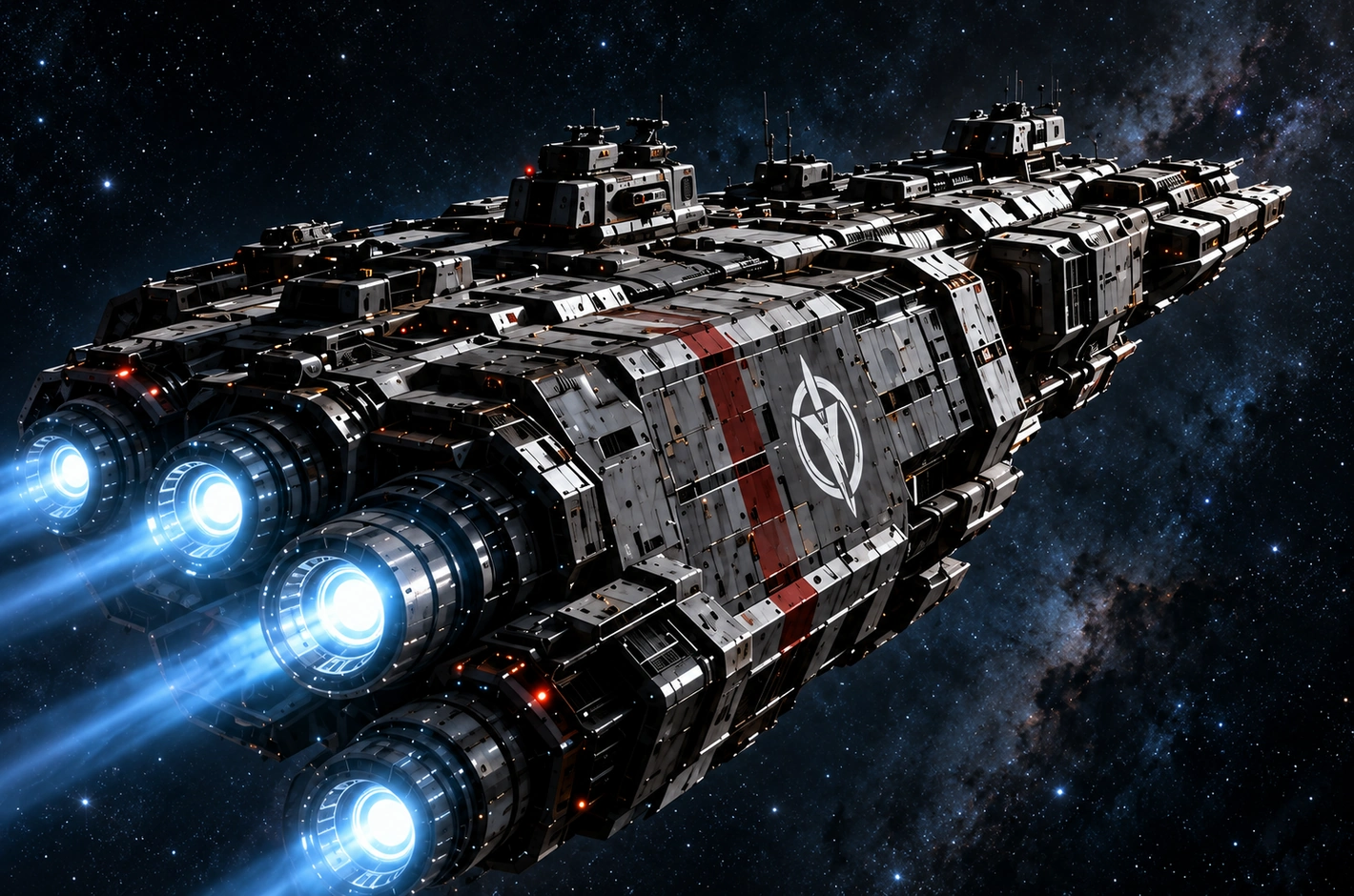
02 / The ship
Step aboard the salvage vessel at the center of the story. Its greatest asset is the crew keeping it alive.
Explore the Nadir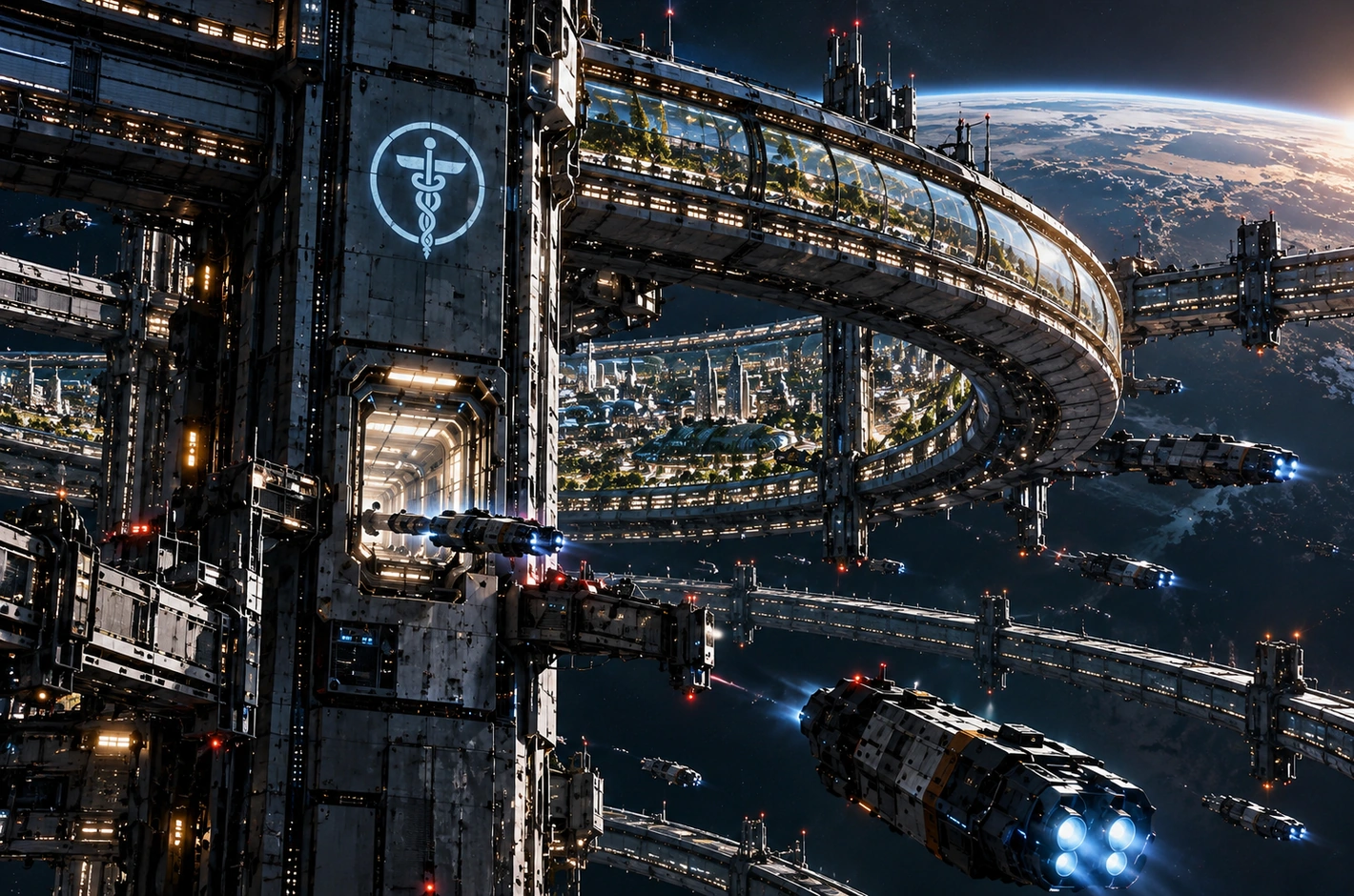
03 / The setting
Discover the colonies: communities shaped by distance, unequal resources, and the struggle to secure a future.
Discover the coloniesNew to the saga? Choose No spoilers in the atlas reading settings. These links do not change your reading progress; the atlas keeps the level you have selected or chosen to remember.
One connected story
Begin with Volume I, then continue through the numbered volumes.
Volume IThe Ship That Never WasYou are here · Start here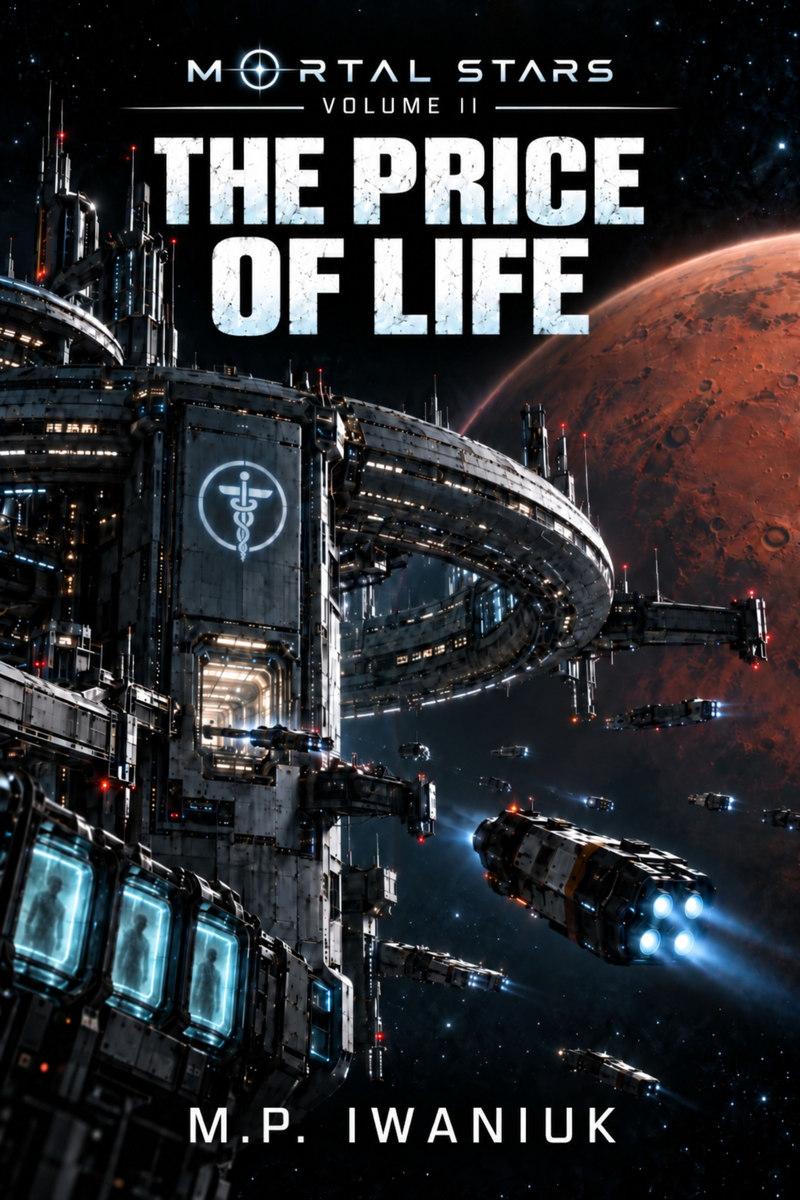 Volume IIThe Price of LifeDiscover Book II →
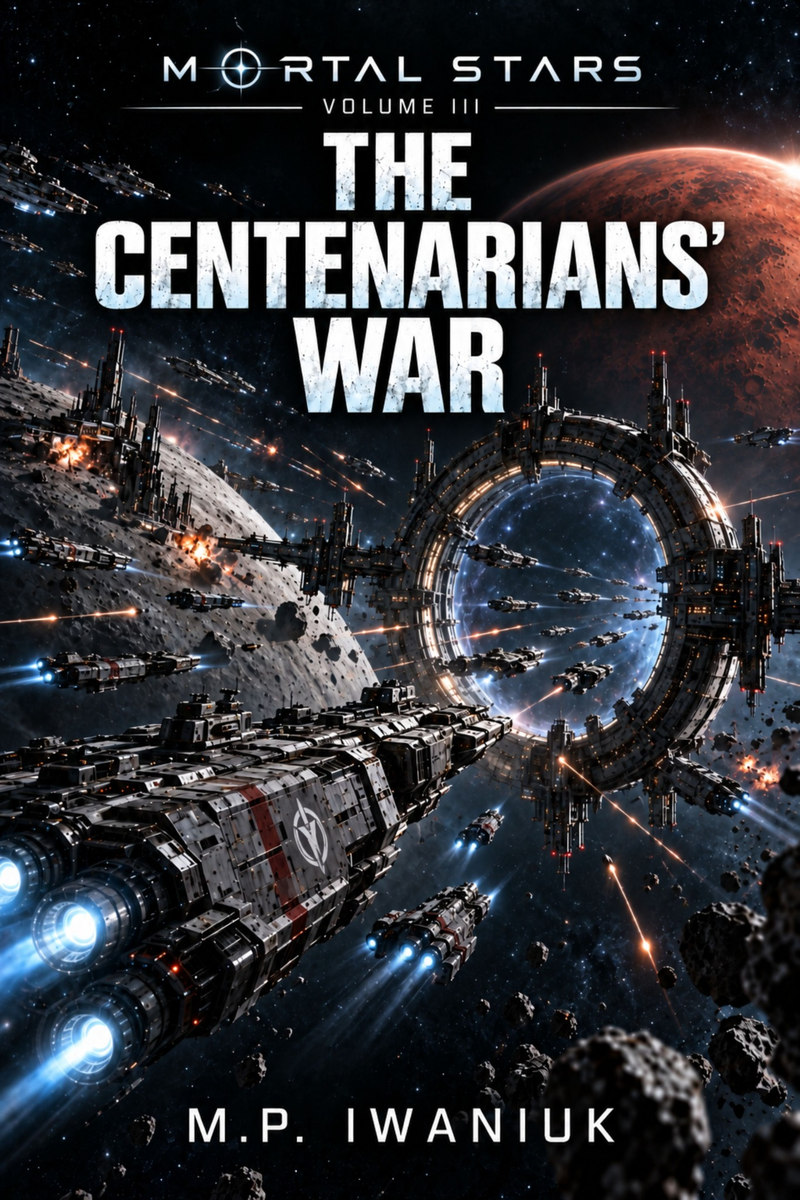 Volume IIIThe Centenarians’ WarDiscover Book III →
 Volume IVEarthDiscover Book IV →
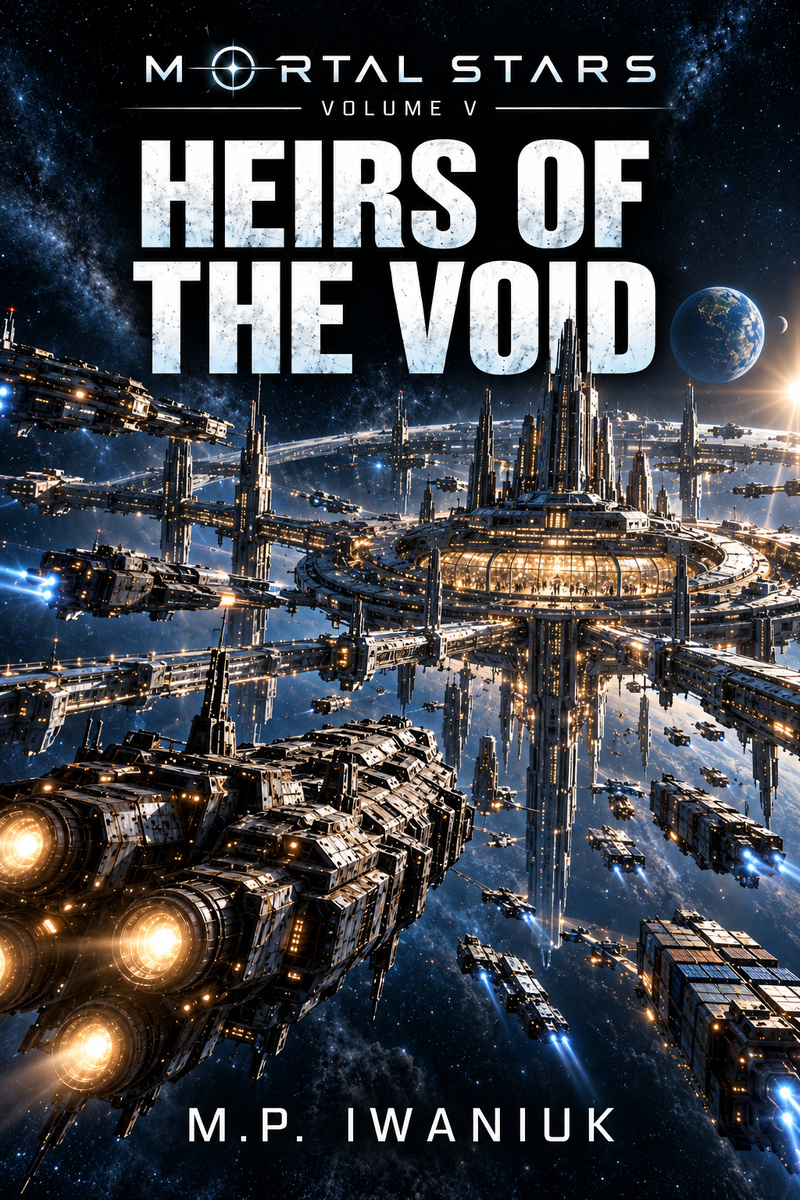 Volume VHeirs of the VoidDiscover Book V →