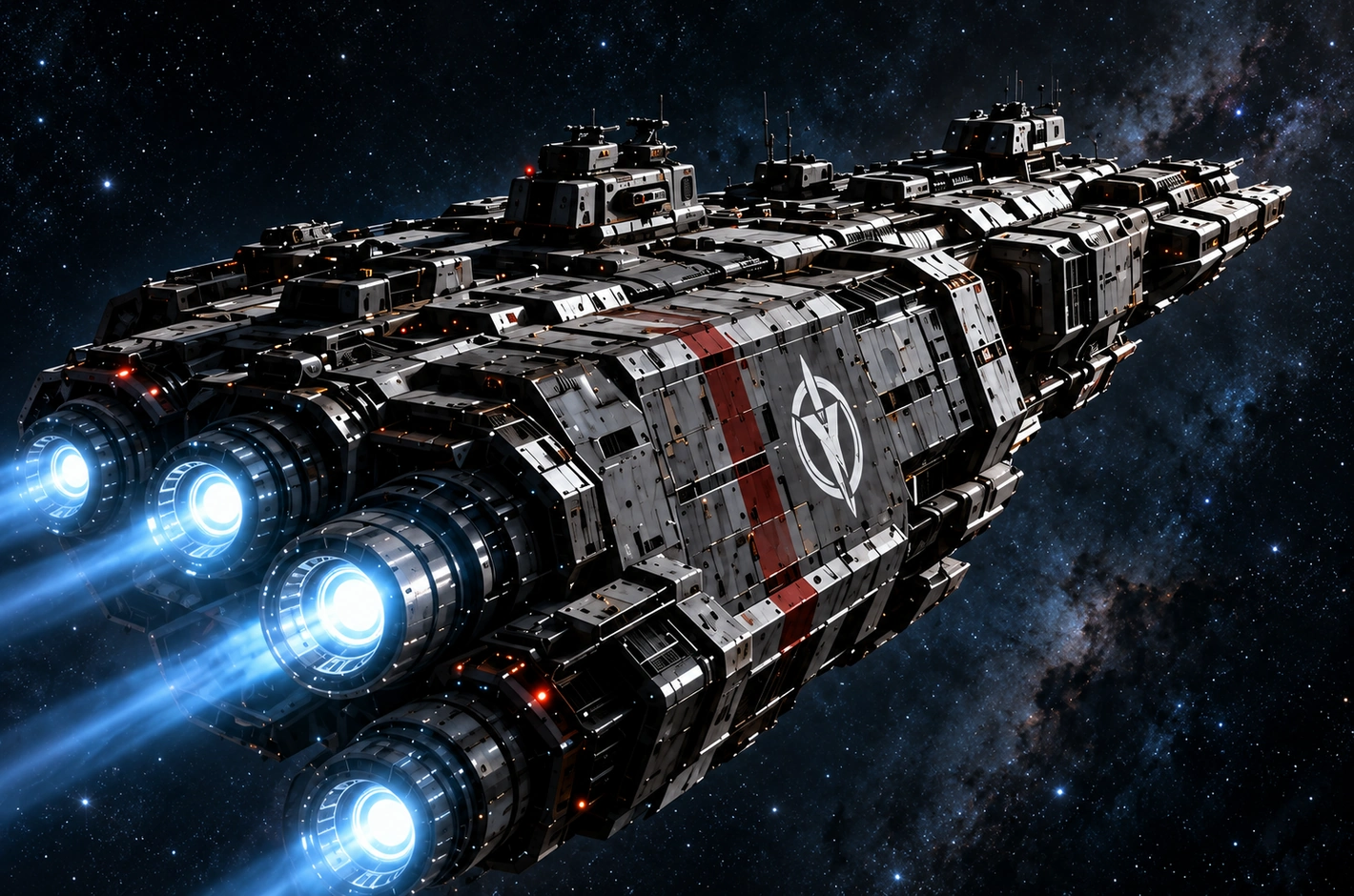
A space opera that starts with a salvage job.
A crew trying to earn its next contract is not setting out to change history. That is where Mortal Stars begins. The Nadir recovers what other people leave behind, and the work depends on equipment, supplies, and trust. Then an unfamiliar distress signal leads to a ship that does not fit the history the colonies have been taught.
The discovery opens a larger story, but it does not remove the practical problems aboard the vessel. Evidence has to be preserved. Claims have to be checked. People still need a way home. If you enjoy a space opera book series in which big questions grow out of the lives of a working crew, this is the starting point.
The setting expands into conflicts between institutions and communities, while the central questions remain personal: what do you owe the people beside you, what can you prove, and what are you prepared to risk?
What kind of science fiction will you find?
A shipboard mystery with wider consequences.
The opening novel brings together salvage work, a vessel that should not exist, and contested records. The mystery is not only what happened in the past. It is also who has the power to decide which version of that past survives.
Life extension without invulnerability.
AION slows aging. It does not make people immortal, and access to treatment is unequal. Wealth, contracts, and institutions connect the possibility of more years to questions of dependence and consent. The guide to science fiction about life extension explores that distinction.
Colonies shaped by distance and politics.
Ships and settlements depend on resources and on one another. There is no faster-than-light travel in this fictional universe; journeys and messages take time. These limits give decisions weight and make competing claims on the future more than an abstract argument. Explore life in the colonies for the setting behind the conflict.
The Mortal Stars books in reading order.
These five novels tell one connected story. Start with Volume I rather than choosing a later book solely for its theme.
- The Ship That Never Was · Volume IA salvage crew encounters a vessel that challenges accepted history. This is the entry point to the series.
- The Price of Life · Volume IIThe struggle widens into the systems governing AION treatment, debt, and the right to choose a longer future.
- The Centenarians’ War · Volume IIIDivided colonies, fragile alliances, and command under pressure bring the human cost of conflict into focus.
- Earth · Volume IVThe search for humanity’s lost homeworld connects evidence and inherited history with questions of belonging.
- Heirs of the Void · Volume VThe final volume asks what should follow discovery, and who is responsible for building a shared future.
Is this the series you are looking for?
The strongest match is a reader drawn to shipboard survival, hidden history, political conflict, and the moral consequences of powerful technology. The Nadir is a working vessel, not an invincible warship. Progress changes what people can do; it does not settle what they should do.
Readers looking specifically for a standalone adventure should know that Mortal Stars is a continuing saga. Readers looking for literal immortality should also know that AION offers life extension, not freedom from injury or death. Those limits are part of the story rather than obstacles it simply wishes away.
The best way to judge the voice and atmosphere is to read the opening of Book I. A short extract is available on this site, with a link to the book on Amazon for its current purchase and sample options.
Explore the world without reading ahead.
The universe introduction explains the main ideas without major plot revelations. The interactive atlas contains character profiles, ship records, and a timeline, with reading-level controls for later material.
Choose No spoilers in the atlas before exploring if you have not started the novels. Atlas links do not reset a reading level you previously chose to remember. You do not need to study the atlas before beginning the books; it is a companion to the story.
This is a guide to the author’s own series, not an independent ranking of other science fiction books. The descriptions above introduce themes, not the outcomes of the novels.